Padel has properly taken over Bali — courts in Canggu, Berawa and Umalas are booked from sunrise, and a lot of visitors end up playing every single day, sometimes twice. Racquet sports concentrate their load into one side of the body and a handful of repeated patterns, which is exactly why the soreness is so predictable — and so treatable.
The overhead problem: serves, bandejas, smashes
Every serve and smash asks the rotator cuff — four small muscles around the shoulder blade — to accelerate the arm and then brake it, hundreds of times a session. It's the identical structure that fails in swimmers and paddling surfers, loaded through a racquet instead of a stroke, and it's the first thing to complain after a heavy padel week.
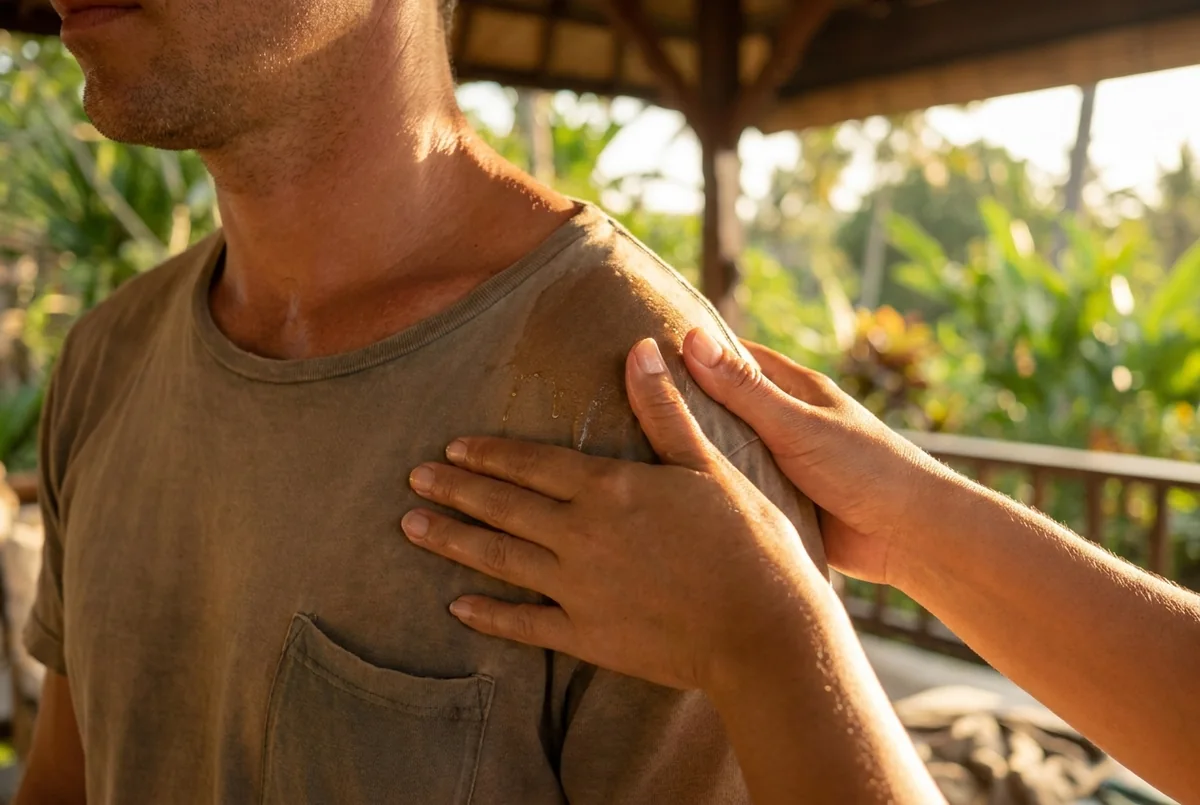
Because racquet sports are one-sided, the load is asymmetric: the playing shoulder, that side of the neck and the same-side upper back all tighten together. A focused shoulder and rotator-cuff session works through exactly this chain rather than rubbing symmetrically past it.
Forearm, wrist and the elbow warning
Grip pressure plus wrist snap loads the forearm extensors — the muscles that ache before "tennis elbow" becomes a diagnosis. Padel makes it worse in its own way: low, quick volleys keep the grip squeezed for whole rallies, so the forearm never gets the micro-rests tennis allows between points. Releasing the forearm early keeps that tension from settling into the tendon. An honest limit: a sharp, persistent point of elbow pain needs load management and rest; massage supports the muscles around it but won't press a tendon problem away.
Legs and back do the sprinting
Padel points are short sprints, lunges and direction changes. First-step speed comes from calves that stay half-loaded all match, with quads and glutes catching every lunge, while the trunk rotates on every drive so the obliques and lower back quietly stack up work. A leg and calf flush plus lower-back and hip release covers the bottom half of the game.
Bali adds its own multiplier: most courts are open-air, and two matches in tropical humidity drain enough fluid and electrolytes to make calves cramp-prone by the evening — the same mechanism that catches runners here. Drink more than feels necessary, and treat evening calf cramp as a booking signal rather than a mystery.
When to book around match days
Playing daily? A maintenance session every two or three evenings keeps the shoulder and calves ahead of the load. After a tournament day, book a same-evening flush. If you've come for one of the island's regular tournaments or a padel-camp week, plan sessions the way the draw runs: light flushing between group days, deeper work once you're out — or once you've won. Save that deep shoulder work for a day you're not playing at all, since freshly released tissue can feel tender for a few hours, which you don't want mid tie-break.
If your Bali week mixes court time with training blocks, the gym and CrossFit recovery guide covers the lifting side. All rates are on the pricing page, and we come to villas everywhere from Canggu to Nusa Dua.