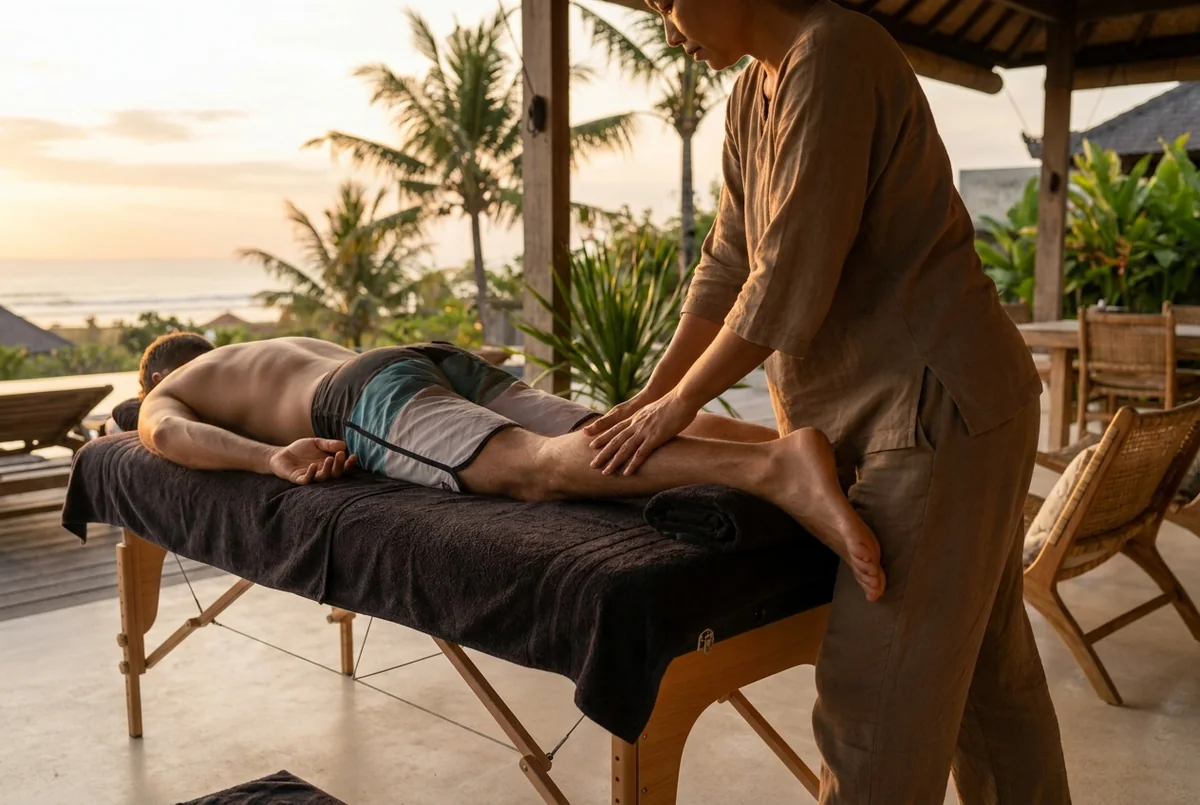
Few things in surfing are as sudden and as helpless as a calf cramp. One moment you are duck-diving a set, the next your lower leg is a rigid, screaming knot and you are clinging to your board a long way from shore. Cramp is not random bad luck — it is the predictable result of overworked muscles, a hot climate, and lost minerals. Understand the mechanics and you can stop most cramps before they start.
What is actually happening when a muscle cramps
A cramp is an involuntary, sustained contraction — the muscle clamps down and refuses to let go. The leading explanation is that a fatigued muscle's protective reflexes get scrambled: the sensors that normally tell a muscle to relax (the Golgi tendon organs) go quiet, while the sensors that tell it to contract (the muscle spindles) become hyperactive. The result is a runaway contraction. Two things tip a muscle toward that state: fatigue from sustained or repeated effort, and a disrupted chemical environment from dehydration and electrolyte loss. Surfing in Bali delivers both in abundance.
Why surfing loads the calves and feet so heavily
Watch your own feet while you surf and you will see the problem. To balance on a moving, tilting board you hold a constant, low-grade pointing and gripping — the calves stay switched on to stabilise the ankle, and the small muscles of the foot grip the deck for control. This is sustained, isometric work with almost no rest, exactly the kind of effort that drains a muscle toward cramp. The longer the session, the closer the calf creeps to its limit.
On top of that baseline load come the duck-dives. Pushing the board and then yourself under an oncoming wave demands a hard, explosive plantar-flexion — a forceful point of the foot driven by the calf. Repeated dozens of times getting out the back at a Bali reef, duck-diving is a brutal interval workout for the calves, layered on top of the constant balancing. A muscle already fatigued from gripping the board, then asked to fire explosively, is a muscle on the edge of cramp.
The muscles involved — and why it matters
The calf is really two muscles stacked together. The gastrocnemius is the big, diamond-shaped muscle you can see; it crosses both the knee and the ankle and powers explosive, knee-straight efforts like duck-dives. Beneath it lies the soleus, a flatter, deeper muscle that crosses only the ankle and handles sustained, low-level work like the constant balancing on the board. Cramp can strike either: a sharp, visible knot high in the calf is often the gastrocnemius, while a deep, aching lock lower down is frequently the soleus.
Two more players matter for surfers. The peroneals run down the outside of the lower leg and constantly fight to keep your ankle stable as the board tilts — they cramp and fatigue from all that side-to-side correction. And the plantar fascia and small foot muscles, worked hard by gripping the deck, can cramp in the arch and cause that distinctive curled-toe spasm in the foot. Knowing which structure has locked tells you exactly where to lengthen and where the underlying tightness lives.
The tropical factor — dehydration and electrolytes
This is the part surfers most underestimate. In Bali's heat you are sweating heavily before you even reach the water — on the scooter, walking down to the break, waxing your board in full sun. Sweat carries away not just water but sodium, potassium, magnesium and calcium, the very electrolytes muscles rely on to contract and, crucially, to relax. Arrive at the line-up already low on fluids and minerals, surf for two hours in salt water that further dehydrates you, and the chemistry inside your calf muscles drifts toward the cramp-prone state.
Magnesium deserves a special mention. It plays a direct role in letting a contracted muscle release, and many people — surfers included — run slightly low on it. Combine a marginal magnesium status with heavy tropical sweating and hours of calf work, and cramp becomes almost inevitable. The fix is unglamorous but real: drink properly through the day, not just at the beach; add an electrolyte mix or coconut water rather than plain water on heavy surf days; and consider a magnesium supplement in the evening if you cramp regularly.
How massage releases and prevents cramp
When you cramp, the muscle is locked in spasm and packed with metabolic waste. Skilled hands-on work physically lengthens the fibres, increases blood flow to flush the tissue, and calms the overactive reflex that is holding the contraction. But the bigger win is prevention. Surfers who cramp repeatedly almost always have chronically tight calves studded with trigger points — small, hyper-irritable knots that lower the threshold at which a muscle will spasm. Clearing those with regular leg, calf and foot massage resets the muscle's resting length and removes the loaded spring that keeps snapping into cramp.
Regular lower-leg work also keeps the calf, the peroneals and the foot supple enough to absorb the repeated explosive demands of duck-diving without seizing. We see it constantly: a surfer who cramps every other session books in for fortnightly calf and foot work, fixes their hydration, and the cramps simply stop. For the bigger recovery picture, our guide to massage after surfing in Bali explains how to slot lower-leg work into your week, and the full surf muscles guide shows how the calves fit into the whole surfing chain.