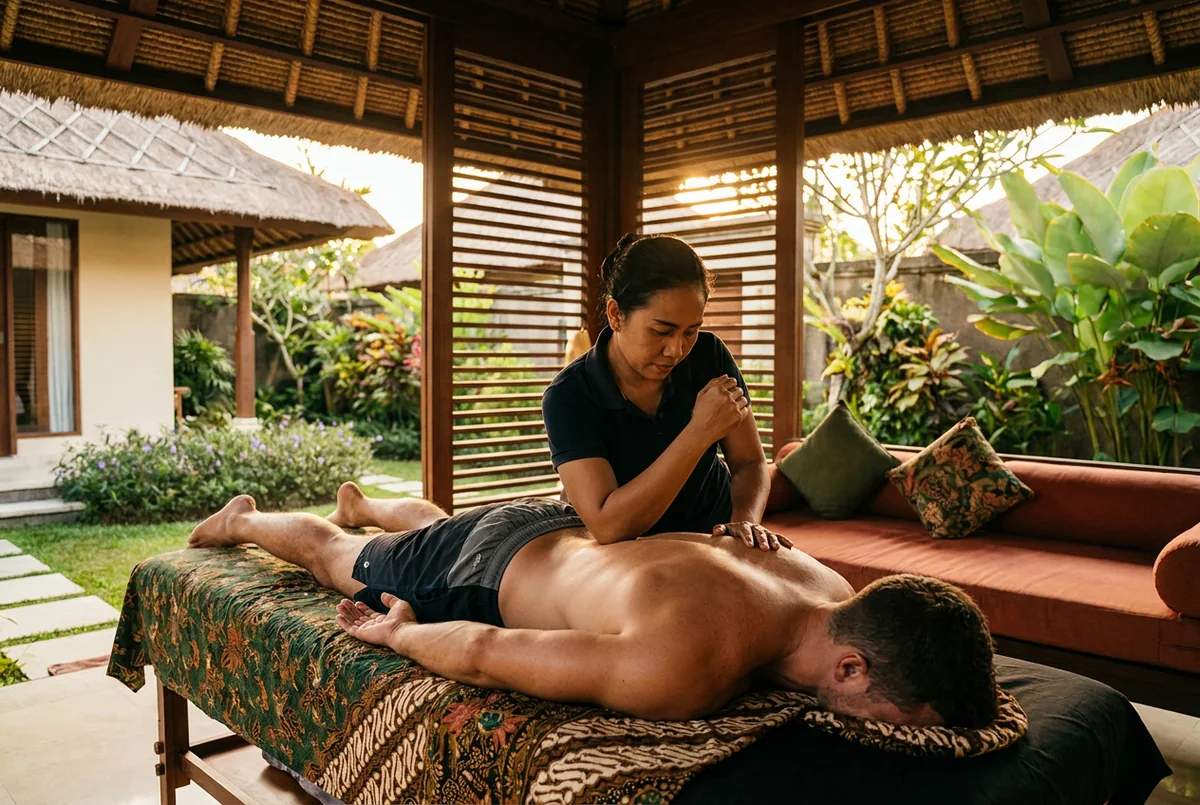
"Deep tissue" and "sports massage" get used as if they were the same thing, and plenty of surfers book one when they really needed the other. The difference is real and it matters. Deep tissue is a precision tool for fixing chronic problems. Sports and surf-recovery massage is a maintenance tool for keeping you surfing. Get the match right and you recover faster, surf better, and waste no sessions.
Deep tissue — slow, sustained, precise
Deep tissue massage is exactly what it sounds like: working into the deeper layers of muscle and connective tissue with slow, sustained, deliberate pressure. The therapist moves slowly because that is how deep tissue releases — fast strokes just slide over a guarded muscle, while patient, steady pressure lets the nervous system let go and the fibres soften. The focus is narrow: a specific knot, a band of scar-like adhesion, a chronically gripped muscle that has not let go in weeks.
For surfers, deep tissue earns its place on the long-standing problems. The shoulder that has been niggling since your paddling volume jumped. The permanently locked spot beside the spine. The thick, ropey calf that keeps cramping. These are not one-session-of-fatigue issues; they are accumulated, structural tightness that needs targeted, intense work to resolve. Our deep-tissue massage is built for precisely this — going after the one or two areas that are genuinely stuck rather than spreading effort thinly across the whole body.
Sports / surf-recovery massage — brisker, broader, flushing
Sports massage — what we deliver as surf-recovery massage — has a different job and a different feel. It is brisker, more rhythmic, and covers broad areas. The signature strokes are flushing movements that move fluid through the muscle, clearing the metabolic by-products of hard exercise, reducing next-day soreness, and bringing fresh blood to fatigued tissue. It typically includes assisted stretching, where the therapist moves your limbs through their range to restore mobility the way deep static pressure alone cannot.
The whole orientation is toward activity and timing. Sports massage is designed to be given around surfing — after a session to speed recovery, between sessions to keep you loose, before a session to prime the muscles. It is not trying to fix a deep structural problem; it is keeping a generally healthy surfing body flushed, mobile and ready. That is why an active surfer on a trip will get far more value from frequent surf-recovery work than from repeated deep tissue.
Side by side
| Aspect | Deep Tissue | Sports / Surf-Recovery |
|---|---|---|
| Pace | Slow and sustained | Brisker and rhythmic |
| Focus | One or two specific problem areas | Broad, whole-body or whole-region |
| Main goal | Release chronic knots and adhesions | Flush fatigue, restore mobility, maintain |
| Stretching | Minimal | Assisted stretching included |
| Best timing | Rest day or well after surfing | Around surfing — before, between, after |
| Intensity | High; can leave tenderness | Moderate; leaves you loose, not sore |
| Best for | A stubborn, lingering problem | An active surf trip and general recovery |
When to choose each — by symptom
The simplest way to decide is to listen to your body's complaint. If you have a specific, localised, lingering issue — a knot you can point to, a shoulder that has hurt for two weeks, a calf that ropes up every session — that is a deep-tissue job. The problem is structural and needs precision. Pair it with the relevant focused service, such as shoulder and rotator-cuff work for paddling shoulders.
If your complaint is general, whole-body fatigue and stiffness after a big surf — everything aches, nothing in particular is injured, you just feel beaten up — that is squarely sports/surf-recovery territory. The flushing strokes and assisted stretching will clear the fatigue and have you fresh for tomorrow. As a rule of thumb: deep tissue fixes a problem, sports massage maintains performance. Many surfers need a little of both across a trip.
Pre-surf vs post-surf timing
Timing is where surfers most often go wrong. Never book intense deep tissue right before surfing. Deep work can leave muscles temporarily tender and slightly weaker as they recover, which is the last thing you want before paddling into a reef break. Deep tissue belongs on a rest day or several hours after your last wave, when the body has time to settle and rebuild stronger.
Before surfing, you want the opposite: a lighter, activating session that warms and mobilises without softening. That is the role of a pre-surf warm-up massage — brisk strokes, joint mobilisation and dynamic stretching to wake the muscles up and prime them for explosive pop-ups. After surfing, surf-recovery flushing work is ideal, while deep tissue is best reserved for the chronic problems on your days off. If you want to map all of this onto a whole trip, our guide on how often to get a massage on a surf trip lays out the scheduling, and the surf muscles guide shows which muscles each style targets.